
Last updated: June 2026 · Reviewed by the Amorexa editorial team
Pheromone perfumes promise something irresistible: a hidden scent that makes you more attractive without anyone knowing why. It’s a compelling idea — but does it hold up? The honest answer is more nuanced than either the hype or the sceptics suggest. The scientific evidence that human pheromones trigger attraction is limited and mixed: no molecule has been conclusively proven to work like a love potion. Yet many people genuinely enjoy wearing pheromone perfumes, and there are real, measurable reasons why. This guide walks through what pheromones actually are, what the research really shows, the main ingredients, safety, and how to choose one if you’d like to try.
What Are Pheromones?
A pheromone is a chemical signal released by one animal that triggers a response in another of the same species. In the animal kingdom they’re well documented — moths, mice and many mammals use them to signal fertility, mark territory or attract mates.
The question is whether humans have them too. We don’t have a clearly functioning vomeronasal organ (the dedicated pheromone-sensing structure many animals use), which is one reason scientists remain cautious. So while “pheromones” are real and powerful in other species, applying the same label to humans is exactly where the debate begins.
(Background reading: explore our men’s intimacy range and women’s range.)
Do Pheromones Actually Work on Humans? What the Science Says
This is the heart of the matter, so let’s be straight about it. The research is genuinely split.
Some studies have found measurable effects. In a 2007 study published in the Journal of Neuroscience, Wyart and colleagues found that simply smelling androstadienone — a compound in male sweat — raised cortisol levels in women and shifted mood and arousal. That’s a real physiological response, though note it’s about hormones and mood, not “instant attraction.” A 2002 study in Physiology & Behavior by McCoy and Pitino reported that women wearing a synthesised pheromone formula recorded more “sociosexual” interactions than a placebo group. It’s an encouraging result — but the sample was small (36 women) and the lead researcher was linked to a company selling pheromone products, so it should be read with healthy caution.
Other, more rigorous work has found no attraction effect. In 2017, Hare and colleagues ran a careful study in Royal Society Open Science on the two most-hyped “sex pheromones” (androstadienone and estratetraenol) and found they had no effect on how attractive faces were rated. And in an influential 2015 review in Proceedings of the Royal Society B, Oxford’s Tristram Wyatt concluded there is no robust evidence that those famous molecules are human pheromones at all — arguing the field took decades of shortcuts and needs to start over with proper methods.
So where does that leave us? A fair, honest summary: pheromone perfumes are not a proven way to make someone attracted to you. The strongest claims you’ll see online aren’t supported by good evidence. What is better supported is subtler — scent affects mood, and feeling good in a fragrance you love can boost your own confidence, which is attractive in its own right. That’s a reasonable reason to enjoy them, without the magical thinking.
Types of Pheromones Used in Perfumes
If you read the labels, the same handful of ingredients come up. Here’s what they are in plain terms:
| Ingredient | Often marketed as | What it’s claimed to do |
|---|---|---|
| Androstenone | Unisex / “for men” | Linked to dominance/masculine signalling |
| Androstadienone (AND) | “For men” | The compound in the cortisol/mood studies above |
| Androsterone | “For men” | Marketed as a subtler masculine note |
| Estratetraenol (EST) | “For women” | Proposed female counterpart to AND |
| Copulins | “For women” | Fatty-acid blend studied in fertility-signalling research |
Most products are sold as gendered formulas (“for him” / “for her”) and come either lightly scented or designed to layer under your usual fragrance. Knowing the ingredient helps you compare products rather than relying on marketing language alone.
Are Pheromone Perfumes Safe? Side Effects and Skin
For the vast majority of people, pheromone perfumes are cosmetic products and are safe to use like any other fragrance. They’re applied to pulse points (wrists, neck) and don’t enter the body in any meaningful way.
A few sensible precautions: if you have sensitive skin or fragrance allergies, do a small patch test on your inner forearm 24 hours before regular use. Avoid broken skin and the eye area, and if you notice irritation, stop. Pheromone perfumes are not medicines and make no health claims — treat them as you would any scented cosmetic.
How to Choose a Pheromone Perfume
If you’d like to try one, here’s a simple buyer’s checklist:
- Match the formula to you. Choose a “for men” or “for women” blend, or an unscented version if you want to layer it under your own perfume.
- Decide scented vs unscented. Scented products are ready to wear; unscented ones are more flexible but subtler.
- Check the concentration. Higher concentration lasts longer; start lighter if you’re new to it.
- Look at the brand and reviews. Established names tend to be more consistent.
- Set a budget. Pheromone perfumes typically range from around €5 to €90 — multi-packs and gift sets cost more — so there’s something at most price points.
A quick note on expectations: choose one because you enjoy the scent and the confidence it gives you — not because you expect guaranteed results. That mindset leads to the happiest purchases.
Best Pheromone Perfumes and Where to Buy in the UK and EU
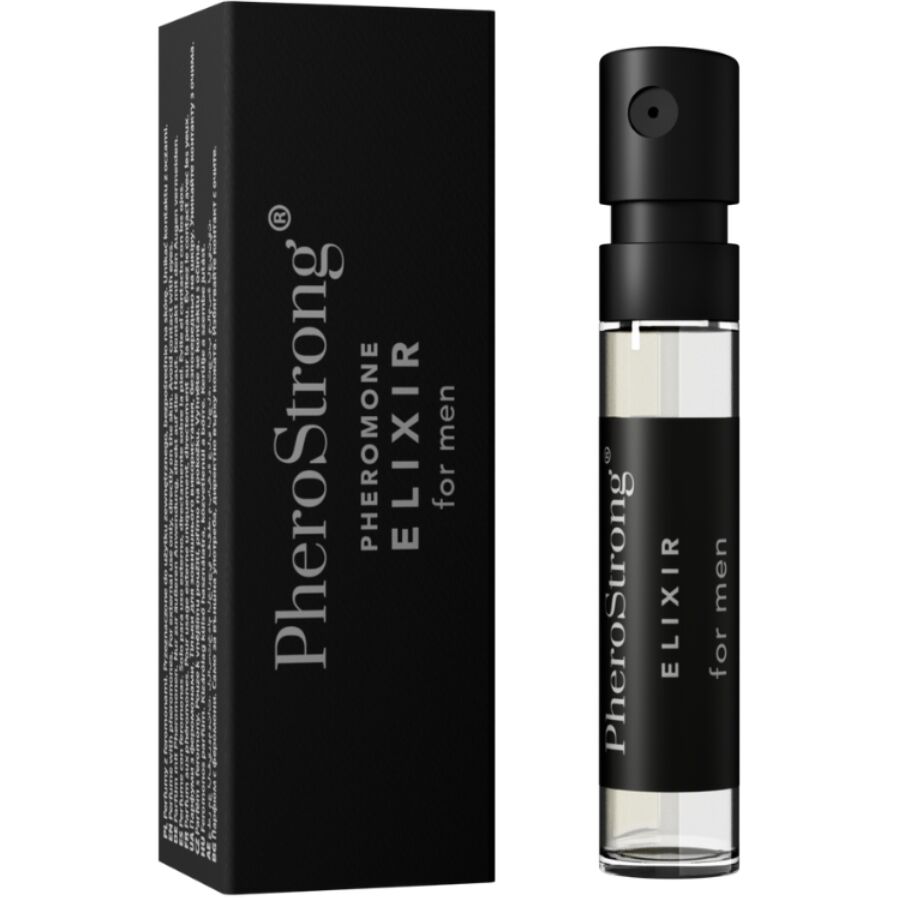
There’s a wide range available, from light everyday scents to stronger concentrated formulas. Well-known options include PheroStrong, Eye of Love and Phiero by 500 Cosmetics, with both men’s and women’s blends. For example, the PheroStrong Elixir for Men and PheroStrong Elixir for Women are popular concentrated picks, while the Eye of Love Confidence parfum is a lighter, everyday option.
If you’re shopping in the UK or EU, you can browse our full pheromone perfume collection for current prices and stock — all orders ship in discreet delivery with secure checkout and fast EU delivery.
The Bottom Line
Pheromone perfumes aren’t the guaranteed attraction-boosters some marketing claims. The science is limited and mixed, and the boldest promises don’t hold up. But scent genuinely affects mood, and wearing a fragrance you love can make you feel more confident — and confidence is attractive. If that appeals to you, a pheromone perfume can be a fun, low-risk addition to your routine. Just go in with realistic expectations, and choose one you’ll actually enjoy wearing.
Frequently Asked Questions
Do pheromone perfumes really work?
The evidence is limited and mixed. No human pheromone has been conclusively proven to trigger attraction, and rigorous studies have found no effect on attractiveness ratings. However, scent affects mood, and many people find a pheromone perfume boosts their confidence — which can be appealing in itself.
What pheromones attract females or males?
Products marketed “for women” often contain estratetraenol or copulins, while “for men” formulas typically use androstadienone, androstenone or androsterone. It’s worth knowing these are claimed effects; the science behind them is still debated.
How long do pheromone perfumes last?
This depends on concentration and skin type, much like any fragrance — typically a few hours. Higher-concentration “elixir” formulas tend to last longer than light everyday sprays.
Can you wear pheromone perfume every day?
Yes. They’re cosmetic fragrances and can be worn daily. If you have sensitive skin, do a patch test first and start with a small amount.
Are pheromone perfumes safe to use on skin?
For most people, yes — they’re used like any scented cosmetic, applied to pulse points. Patch-test first if you have fragrance allergies or sensitive skin, and avoid broken skin and the eye area.
Do you apply pheromones before or after regular perfume?
If you use an unscented pheromone product, apply it first and layer your usual perfume on top. Scented pheromone perfumes can be worn on their own.
About this guide. Written and reviewed by the Amorexa editorial team. Amorexa is an EU-based intimacy retailer; we sell some of the products mentioned here and aim to give honest, evidence-led information rather than marketing hype. Last updated June 2026.
References
- Wyart C. et al. (2007). Smelling a Single Component of Male Sweat Alters Levels of Cortisol in Women. Journal of Neuroscience, 27(6):1261–1265.
- McCoy N.L., Pitino L. (2002). Pheromonal influences on sociosexual behavior in young women. Physiology & Behavior, 75.
- Hare R.M. et al. (2017). Putative sex-specific human pheromones do not affect gender perception, attractiveness ratings or unfaithfulness judgements of opposite sex faces. Royal Society Open Science, 4(3):160831.
- Wyatt T.D. (2015). The search for human pheromones: the lost decades and the necessity of returning to first principles. Proceedings of the Royal Society B, 282(1804):20142994.


